Nestled in the foothills of the Sangre de Cristo Mountains, Pecos Village in New Mexico boasts a rich tapestry of history that spans centuries. Its story is one of cultural convergence, strategic significance, and enduring legacy — a story that plays out in the ruins, the river, and the land itself.
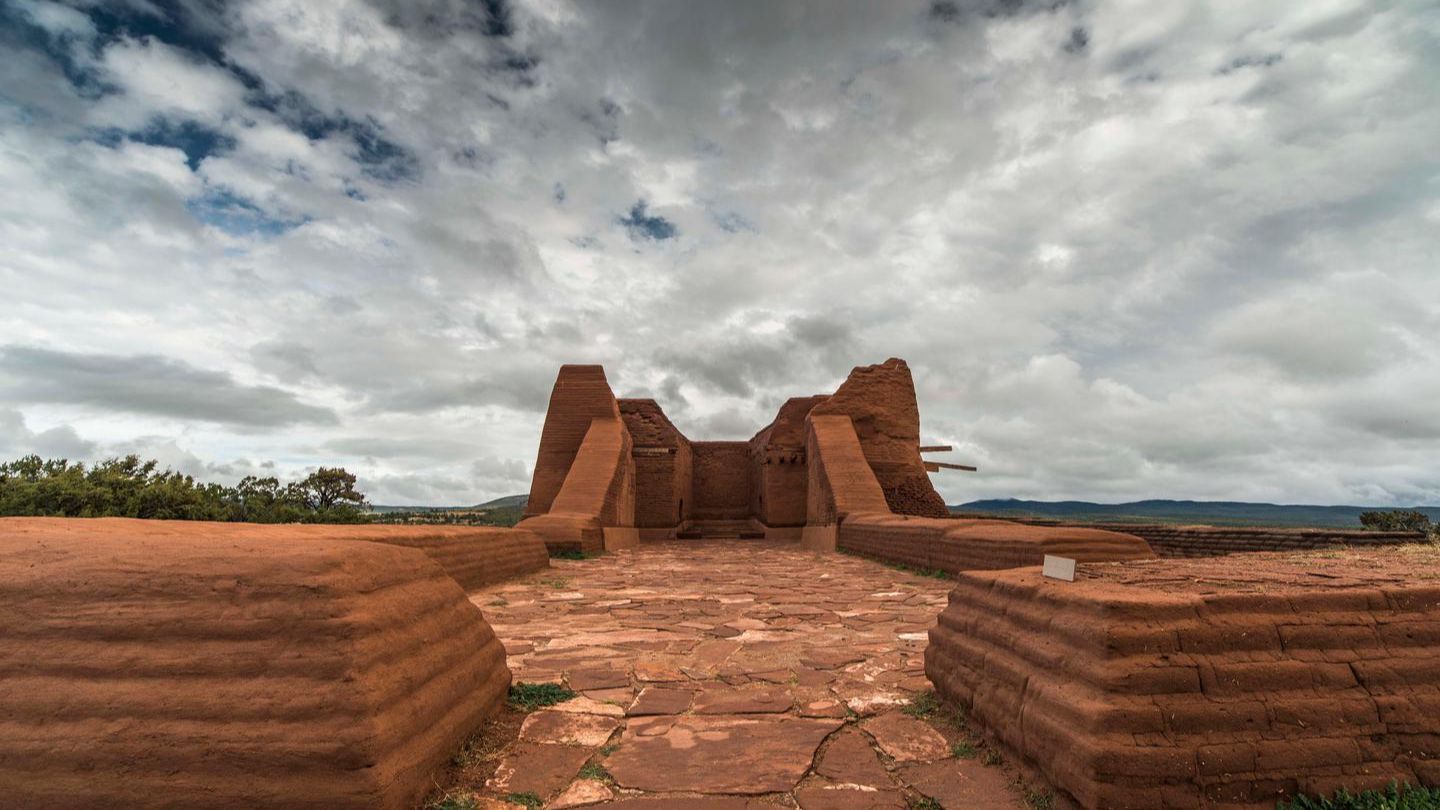
Ancient Beginnings
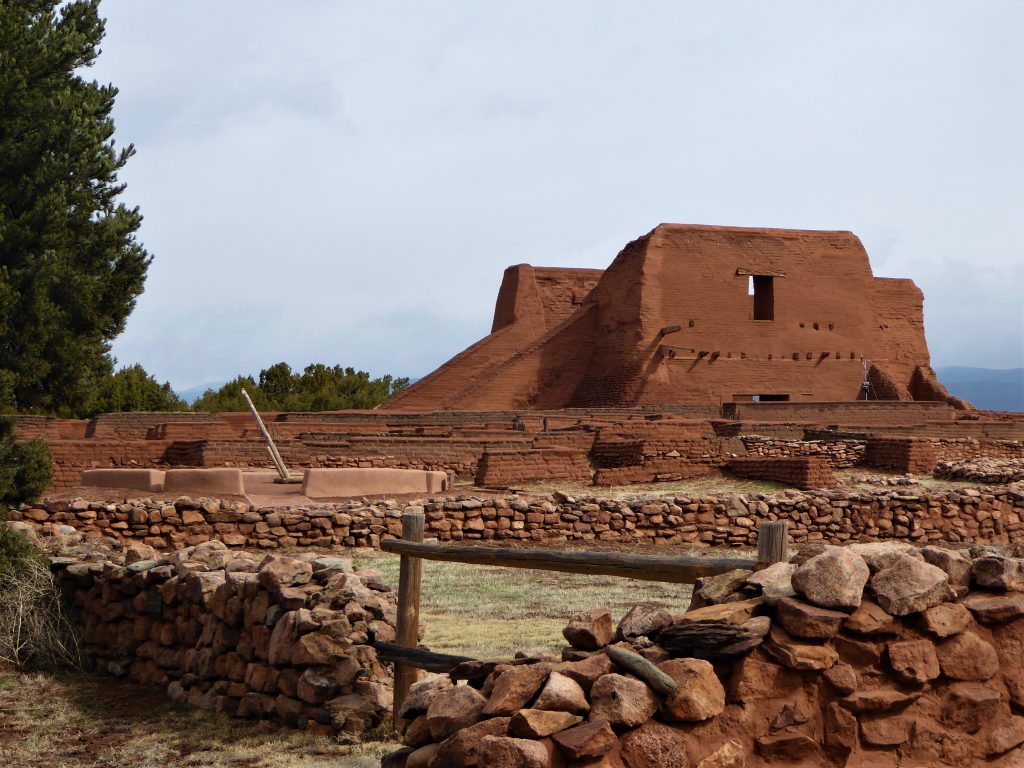
Long before European contact, the area now known as Pecos was inhabited by indigenous peoples. Archaeological evidence suggests that by the 8th century, native nomads and traders had established settlements along Glorieta Creek. These early inhabitants laid the foundation for what would become one of the most significant cultural and trade centers in the entire American Southwest.
The Rise of Pecos Pueblo
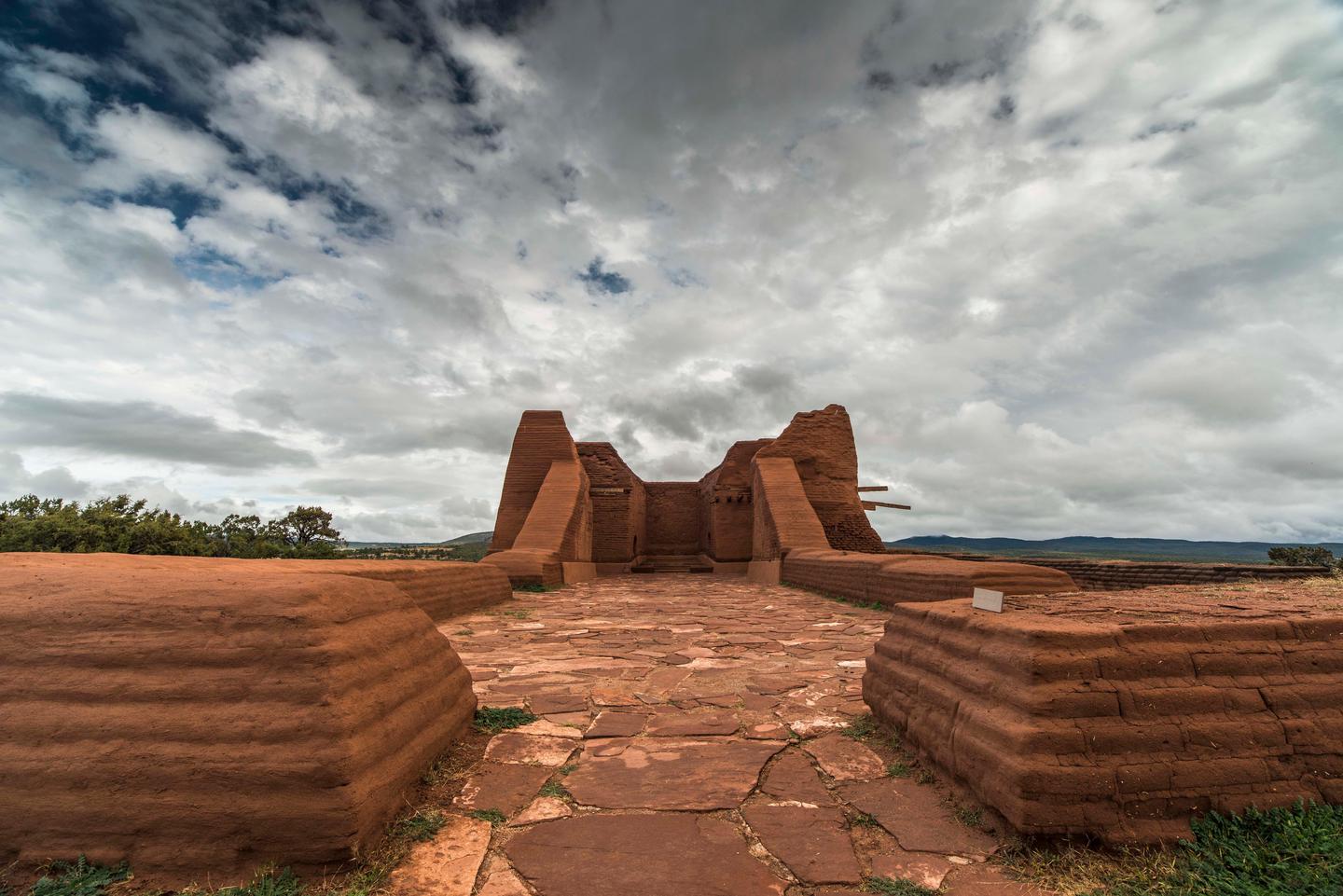
By the 14th century, the Pecos Pueblo had emerged as a formidable presence. Strategically perched on a rocky ridge, the pueblo was a multistoried, stone-and-mud citadel housing nearly 2,000 residents. Its location served as a gateway between the Puebloan cultures to the west and the nomadic tribes of the Great Plains to the east, facilitating extensive trade networks that stretched across the continent.
The Pecos people were adept traders, exchanging agricultural products like corn, beans, and squash, as well as pottery and obsidian, for buffalo meat and hides from Plains tribes. This exchange not only bolstered their economy but also enriched their cultural tapestry in ways that archaeologists are still discovering today.
First Settlements
Native nomads and traders establish settlements along Glorieta Creek, laying the foundation for what will become one of the Southwest's most important cultural centers.
Pecos Pueblo Rises
A multistoried citadel housing nearly 2,000 residents becomes the dominant trade hub between Puebloan and Plains cultures, controlling commerce across hundreds of miles.
Spanish Arrival
Francisco Vásquez de Coronado arrives at Pecos Pueblo, marking the beginning of European contact. The Spanish are struck by the pueblo's remarkable size and fortifications.
Mission Era
Spanish friars establish missions within the pueblo, beginning a period of cultural blending that left an indelible mark on the region's religious and cultural landscape.
Abandonment
After centuries of pressure from colonization, disease, and shifting trade dynamics, the remaining inhabitants abandon the pueblo and relocate to Jemez Pueblo, where their descendants live today.
Spanish Contact and Missionary Influence
In the spring of 1541, Spanish explorer Francisco Vásquez de Coronado arrived at Pecos Pueblo, marking the beginning of European interaction. The Spanish were struck by the pueblo's size and fortifications, noting it as the largest and most robust among all the Pueblos they encountered.
The 17th century ushered in a period of missionary activity. Spanish friars established missions within the pueblo, aiming to convert the indigenous population to Christianity. The blending of Spanish and Puebloan cultures during this era left an indelible mark on the region's religious and cultural landscape — a fusion still visible in the ruins that stand today.
Decline and Abandonment
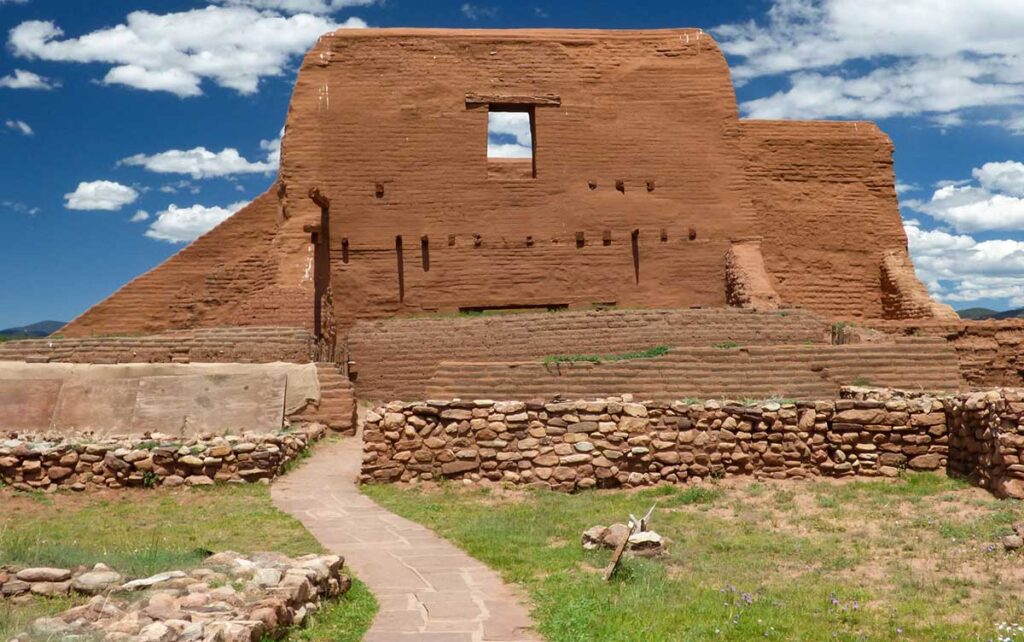
The ruins of the Spanish mission at Pecos Pueblo, preserved today at Pecos National Historical Park.
Despite its early prominence, Pecos Pueblo faced numerous challenges in the ensuing centuries. The pressures of European colonization, epidemic disease, and shifting trade dynamics contributed to its slow decline. By 1838, the remaining inhabitants — just a handful of survivors — abandoned the pueblo entirely, leaving behind a legacy etched in the ruins that still stand today.
Modern-Day Pecos
Today, the village of Pecos is a testament to its storied past. Located along the Pecos River, the village is within an hour of Santa Fe and is home to notable sites such as the Pecos National Historical Park and the Pecos Benedictine Monastery.
What to visit near Vida Bonita Pecos
- Pecos National Historical Park — Walk the ruins of the ancient pueblo and the Spanish mission. Trail guides and exhibits bring the history to life.
- Pecos Benedictine Monastery — A place of quiet reflection and spiritual history, open to visitors.
- Glorieta Pass Battlefield — Site of a pivotal Civil War battle that helped secure New Mexico for the Union.
- Cowles Ponds — Just up the road from Vida Bonita Pecos, a beautiful spot for fishing and picnics.
- Winsor Trail — Access points for the Pecos Wilderness hiking system, beginning near the property.
The Pecos National Historical Park preserves the remnants of the ancient pueblo and the Spanish mission, offering visitors a window into the area's rich history. The park's trails and exhibits provide insights into the lives of the Pecos people and their interactions with European settlers — a story unlike any other in New Mexico.
The history of Pecos Village is a microcosm of the broader narratives that have shaped the American Southwest. From its origins as a thriving trade center to its role in the cultural exchanges between indigenous peoples and European settlers, Pecos stands as a symbol of resilience, adaptation, and cultural fusion. Exploring its past offers valuable lessons that feel surprisingly relevant today.
Stay in the Heart of This History
Vida Bonita Pecos sits just miles from the ruins, the river, and the trails that shaped this remarkable region. Explore the past by day, return to luxury by night.
Check Availability & Book →